
Last Updated: November 3, 2026
Quick Summary
To fit a horse bridle correctly, work from the headpiece down, adjusting one strap at a time in order: headpiece, browband, cheekpieces, noseband, throatlash, then bit. Check each part as you go, then watch the horse move to confirm the fit.
- A noseband should be snug but never tight: one finger under a cavesson, two under a flash, four under a drop or grackle.
- The noseband sits below the cheekbone, clear of the facial crest, lying flat all round.
- The throatlash should allow a hand's width at the throat.
- Recheck bridle fit every few weeks, after any workload change, and whenever the horse changes condition.
- Call a qualified saddler or equine dentist if head shaking, mouth damage or a change in way of going does not fix with adjustment.
Table of Contents
- How to Adjust a Horse Bridle: An Ordered Walkthrough
- How Tight Should a Horse Noseband Be?
- Signs of a Poorly Fitting Bridle, In Hand and In Motion
- Frequently Asked Questions
How to Adjust a Horse Bridle: An Ordered Walkthrough
Learning how to fit a horse bridle correctly starts with one rule: work from the headpiece down, adjusting one strap at a time. Trouble bridles are often the ones fitted in a rush.
- Headpiece: behind the ears, clear of the poll, browband holding it forward.
- Browband: clears the ear bases without pinching.
- Cheekpieces: buckle so the bit sits at the right height.
- Noseband: below the cheekbone; check with the finger rule.
- Throatlash: a hand's width at the throat.
- Bit: check position and clearance, then watch the horse move.
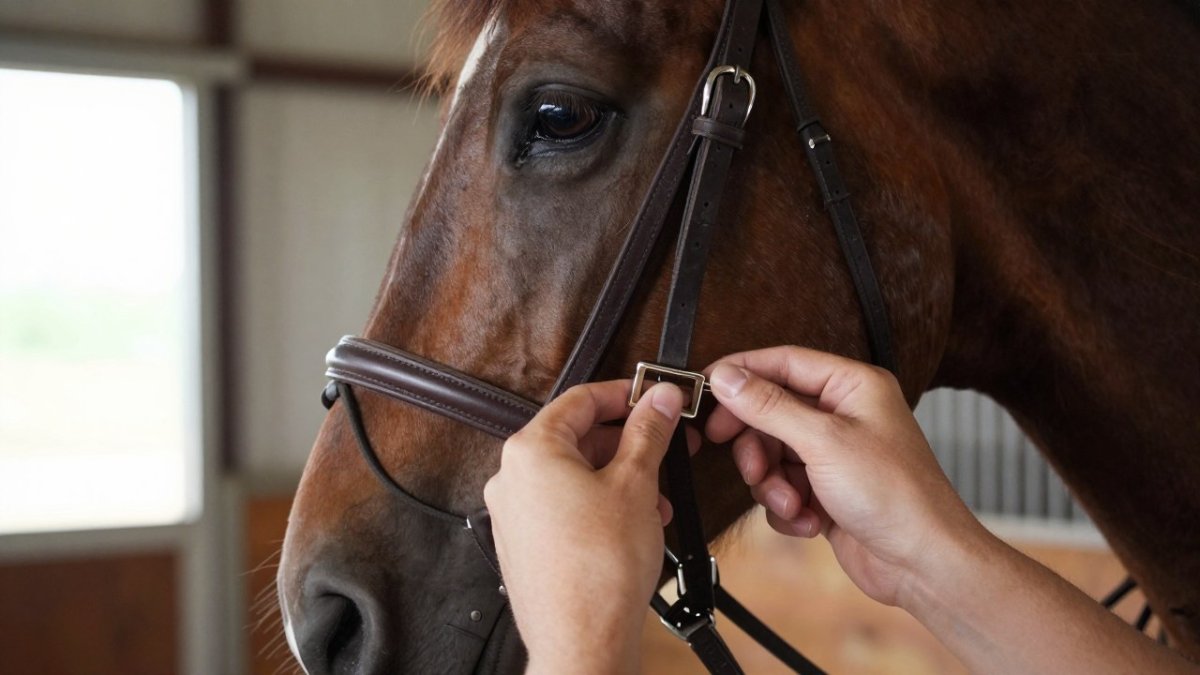
Fit the bridle in this order, one strap at a time, from the headpiece down. For extra detail and visuals, see the bridle fitting guide.
| Step | Strap or part | What to check |
|---|---|---|
| 1 | Headpiece | Behind the ears, clear of the poll |
| 2 | Browband | Clears the ear bases without pinching |
| 3 | Cheekpieces | Buckle so the bit sits at the right height |
| 4 | Noseband | Below the cheekbone; check with the finger rule |
| 5 | Throatlash | A hand's width at the throat |
| 6 | Bit | Check position and clearance, then watch the horse move |
How Tight Should a Horse Noseband Be?
A noseband should be snug but never tight: one finger under a cavesson, two under a flash, four under a drop or grackle. Too tight presses on the nasal bone and jaw, and horses respond by opening the mouth, tilting the head or fighting the contact. It sits below the cheekbone, clear of the facial crest, lying flat all round.
Signs of a Poorly Fitting Bridle, In Hand and In Motion
A badly fitted bridle shows up in small ways first. If you are checking fit in hand, an in-hand bridle is suited to groundwork and inspection. Check these signs in hand before you ride:
- Rubbing or hair loss behind the ears or at the mouth corners
- The browband pinching the ear bases
- The bit too high (lips pulled up) or too low (clanking on teeth)
- The noseband riding up towards the cheekbone
- A throatlash tight enough to crease the skin
- The headpiece slipping sideways when leading
Then watch the horse in motion: head tossing, a hollow outline, opening the mouth, tilting or sudden reluctance to go forward all point to pressure somewhere.
Rhinegold Leather Comfort Bridle Padded All Sizes →
When should you call a professional?
Call a qualified saddler or equine dentist if the horse shows consistent head shaking, mouth damage or a change in way of going that adjustment does not fix.
How often should you recheck bridle fit?
Recheck every few weeks, after any workload change, and whenever the horse changes condition. Leather stretches, so clean and condition it regularly and replace cracked or worn straps before they fail.
Frequently Asked Questions
How should a bridle fit a horse?
A correctly fitted bridle sits with the headpiece behind the ears, the browband lying flat above the base of the ears, the noseband below the cheekbone and the bit resting at the corners of the mouth. You should be able to slide one adult finger under the noseband and a hand's width between the throatlash and the jaw. Check every strap with the horse standing still, then watch for rubbing or resistance once you ride.
How do you know if a bridle is too tight?
The clearest signs of a poorly fitting bridle are a noseband you cannot fit one adult finger under, a throatlash tight against the jaw, or a browband pinching the base of the ears. In motion, watch for head tossing, a hollow frame, rubbing behind the ears or at the corners of the mouth, and a horse that resists the bit. Loosen one strap at a time and reassess before you ride again.
Can a poorly fitting bridle hurt a horse?
Yes. A noseband that is too tight presses on the nasal bone and jaw, and a headpiece that sits too far forward puts pressure on the nerve-rich area at the poll. Both can cause rubbing, resistance to the bit and discomfort under saddle. Padded comfort bridles, such as the Rhinegold Leather Comfort Bridle at £52.99, are designed to cushion the headpiece, browband and crank noseband, but the padding only helps if the straps are adjusted correctly.
Getting the fit right takes ten minutes and saves months of discomfort. If you are unsure where to start, our range of leather bridles is personally tested and priced from £38.69, with free UK postage on every order. Shop the full range at Dufinkle and get your horse comfortable in a bridle that fits from the first ride.

