

Last Updated: November 13, 2026
Quick Summary
Leather saddles are made from cured hide and mould gradually to the horse and rider, lasting many years with routine care. Synthetic saddles are generally lighter and easier to maintain, but their coated surfaces can crack or fade. Fit matters more than material for comfort, so a leather saddle or a synthetic one should be checked by a qualified fitter.
- Leather saddles can last many years when they receive routine care.
- Synthetic saddles are generally lighter than leather saddles.
- Comfort depends on tree fit and flocking, not on the material.
- Wipe leather after every ride and deep-clean it monthly.
- Check stitching, girth straps and fittings each time you clean.
Table of Contents
- What Leather and Synthetic Saddles Are Made From
- Leather vs Synthetic Saddles: Durability, Comfort and Weight
- How to Clean a Leather Horse Saddle and Keep Synthetic Ones Looking New
- Choosing Your Saddle: Fit, Fitting Services and Your Next Step
- Frequently Asked Questions
What Leather and Synthetic Saddles Are Made From
Leather saddles are built from cured hide, usually cowhide, and quality depends on the grade of leather and how it is tanned. Synthetic saddles use man-made materials that mimic leather while being easier to care for.
Leather saddles mould gradually to rider and horse. Synthetic saddles are lighter and more consistent unit to unit, suiting those prioritising easy upkeep and a lower purchase price.
Leather vs Synthetic Saddles: Durability, Comfort and Weight
Leather responds to care: a well-kept leather saddle can last many years, with stitching, girth straps and flocking needing attention before the hide itself. Synthetic saddles vary enormously, from coated fabrics and microfibre to synthetic leathers over a synthetic tree; some resist moisture, staining and fading better than leather, while others show seam wear, cracking at flex points or fading sooner.
Leather saddles reward routine care with long service life, while synthetic saddles can show wear once a coated surface breaks down. A saddle's real cost depends on how well it is cared for over the years.
Comfort depends on the individual horse and rider, and material is often a distraction. What determines comfort is the fit of the tree, the shape and width of the panels, the condition of the flocking and how evenly the rider's weight is distributed. A poorly fitting leather saddle will cause more discomfort than a well-fitting synthetic one, and the reverse is equally true. A professional fitting check is more valuable than any material comparison.
Weight is a genuine practical difference. Synthetic saddles are generally lighter, which can help when carrying saddles around a yard or riding long distances.
For hacking and schooling, grip and stability matter most. Match the saddle to the work the horse actually does, then confirm fit with a qualified fitter.
The main differences between leather and synthetic saddles come down to durability, comfort and weight, as summarised below.
| Factor | Leather saddle | Synthetic saddle |
|---|---|---|
| Durability | Lasts many years with routine care | Wear can appear once coated surface breaks down |
| Comfort | Depends on tree fit and flocking, not material | Depends on tree fit and flocking, not material |
| Weight | Heavier | Generally lighter |
| Weak points | Stitching, girth straps and flocking | Seam wear, cracking at flex points, fading |
How to Clean a Leather Horse Saddle and Keep Synthetic Ones Looking New
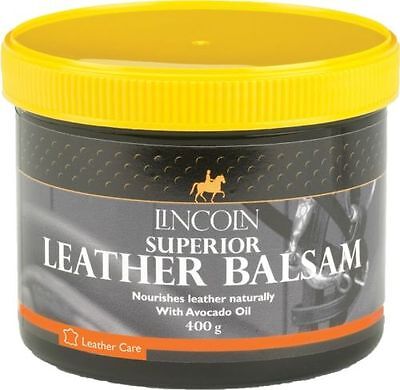
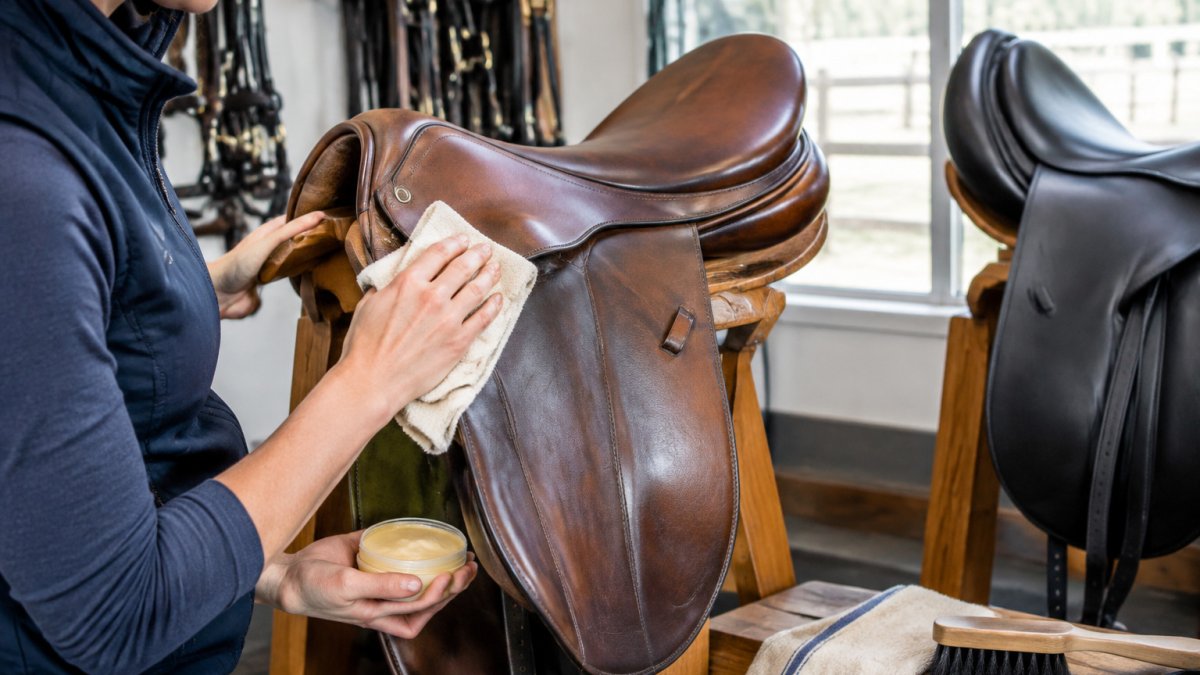
Remove loose dirt and sweat with a damp cloth first, then work saddle soap into a small area at a time, wiping off residue before it dries. A suitable leather cleaning sponge helps spread the cleaner evenly across the surface. Condition the leather sparingly to keep it supple, paying particular attention to flex points such as the girth straps, stirrup leathers and seat seam, where cracking tends to start. A matching leather soap is designed to work alongside this routine. Avoid soaking the leather or drying it near direct heat. Over-conditioning leaves a greasy film that attracts dirt and can weaken stitching.
Synthetic saddles need less work but are not maintenance-free. A damp cloth and mild soap usually removes sweat and dirt, and a soft brush can lift grit from textured surfaces. Coated surfaces can crack at flex points, fade in strong sunlight, and stain from certain dyes or wet saddle pads left in contact. Check seams and adjustable fittings periodically, because a worn seam or loose gullet plate is a safety issue.
Mould is a particular risk in damp tack rooms, so leather should be stored dry and ventilated, ideally on a saddle rack that supports the panels rather than a narrow rail that distorts them. Synthetic saddles should be kept out of direct sunlight to slow fading and checked for mould. After wet rides, dry both materials naturally away from radiators and direct sun.
Wipe down after every ride, deep-clean leather monthly and synthetics as needed, and inspect stitching, girth straps and fittings each time you clean. A saddle that is cleaned but never checked can fail under load.
Choosing Your Saddle: Fit, Fitting Services and Your Next Step
Fit is the most important factor for both horse and rider, whatever the material. Ask about saddle fitting services in your area before buying, as a qualified fitter can check the saddle against your horse's back shape and your riding position.
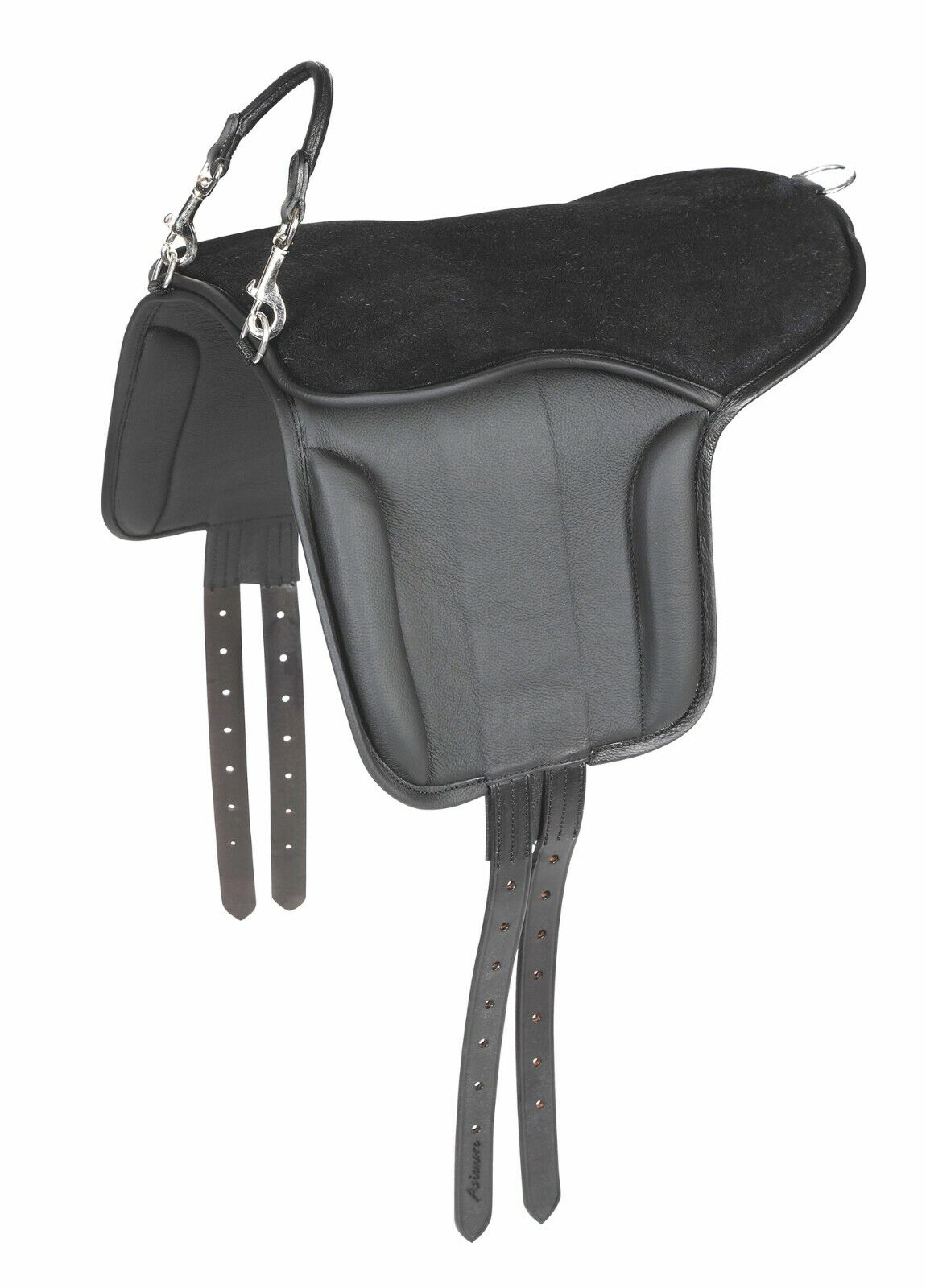
If you are buying a first saddle or a pony saddle, consider a leather saddle pad alongside it. The [PRODUCT: Shires Velociti Gara Pony Saddle Riding Pad in Havana or Black One Size | https://dufinkle.co.uk/products/shires-aviemore-pony-saddle-riding-pad-in-havana-or-black-one-size] is a hardwearing option at £85.49, with stability features suited to new riders.
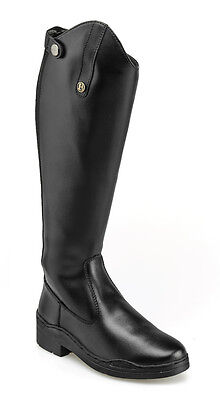
For riding boots, the [PRODUCT: Brogini Modena Long Synthetic Leather Riding Boots Zip Up Black Vegan Friendly | https://dufinkle.co.uk/products/brogini-modena-long-synthetic-leather-riding-boots-zip-up-black-vegan-friendly] costs £72.99 and suits riders on a budget who want a durable boot.
Once you have narrowed down your choice, browse the full range at Dufinkle and compare options that fit your budget and riding needs.
Frequently Asked Questions
Are synthetic saddles as durable as leather?
Both materials can last well with regular care, and durability depends largely on construction and maintenance. Neither material is automatically more durable. Check the construction, the tree and the stitching, and buy from a retailer that stocks trusted brands so you can compare specifications directly before deciding.
Do synthetic saddles offer the same comfort as leather?
Comfort depends more on how well a saddle fits your horse and rider than on the material alone. Whichever you choose, ask a qualified saddle fitter to check the tree and flocking against your horse's back before you commit.
How do I clean and maintain a synthetic saddle compared to leather?
Both types benefit from regular cleaning after riding, using a damp cloth and a cleaner suited to the material. Avoid heat and soaking when cleaning either type, and check stitching and girth points regularly for wear.
