
Last Updated: November 4, 2026
Quick Summary
A beginner rider needs a certified riding hat, closed-toe boots with a small heel, comfortable clothing that allows full movement, and a body protector for the first ride. Start by buying the hat and footwear, since most riding schools require them. The rest can be added as your riding develops.
- Buy a riding hat meeting the PAS 015 standard, indicated by the British Kitemark.
- Choose a hat that fits now, since a loose hat moves on impact and protects less.
- Boots should have a smooth sole and a small heel so the foot does not slip through the stirrup.
- A first kit of hat, boots and jodhpurs should cost around £150-£250.
- Body protectors are essential for jumping and younger riders, and can be hired for early lessons.
Table of Contents
- Essential Protective Gear: Riding Hats, Body Protectors and Safety Standards
- Riding Hat Fitting Guide: How to Get a Secure, Safe Fit
- What to Wear for Horse Riding: Clothing for Comfort and Movement
- Best Boots for Horse Riding Beginners: Footwear That Protects and Grips
- Beginner Horse Riding Kit List: Everything to Pack for Your First Lessons
- Building a Prioritised Budget: What to Buy First and What Can Wait
- Fit, Sizing and Trying Gear On Before You Buy
- Booking Your First Lesson and Starting Your Kit Today
- Frequently Asked Questions
A beginner rider needs a certified riding hat, a pair of closed-toe boots with a small heel, comfortable clothing that allows full movement, and a body protector for the first ride. Dufinkle is a family-run online saddlery with over 40 years of equestrian showing experience, and we know how much easier the first lessons can be once the right kit is in place. This guide covers each item, what to look for in it, and how to build a sensible budget.
Before buying anything, it helps to understand the difference between what a stable will require you to wear and what is genuinely recommended for your safety. Riding schools commonly ask riders to wear a hat meeting a recognised standard and footwear with a heel. Everything beyond those basics is about comfort, durability and confidence. We recommend starting with the items that protect your head and back, then adding the rest as your riding develops.
Our practical advice is simple: buy the protective items new, buy the clothing to fit the lessons you are actually booking, and treat the rest as an upgrade. A beginner who buys a cheap, poorly fitting hat is in a worse position than one who waits a month and buys a proper one.
Essential Protective Gear: Riding Hats, Body Protectors and Safety Standards
A riding hat is the single most important purchase a new rider will make. In the UK, look for a hat that carries the British Kitemark to the PAS 015 standard, which is the widely recognised benchmark for equestrian helmets (BSI Product Directory Details(https://www.bsigroup.com/en-GB/products-and-services/assessment-and-certification/validation-and-verification/product-directory-details/?license=KM%2030569&productid=9361)). Our Rhinegold Dial-To-Fit Horse Riding Hat is certified to PAS 015:2011 and features a rear dial-fit system so you can tighten it for a secure fit.
[PAGE_LINK: Rhinegold Dial-To-Fit Horse Riding Hat | page:1]
A body protector is the second key item, particularly for younger riders and anyone jumping. Body protectors are rated to the BETA standard, and the products below are certified to Level 3. The Whitaker Pro Child Body Protector is certified to EN13158-2018 Level 3 and features articulated panels that mould to the body, while the Champion Liber8 offers a tailored fit with adjustable tabs at the waist and shoulders.
[PAGE_LINK: Whitaker Pro Child Body Protector | page:2]
[PAGE_LINK: Champion Liber8 Body Protector | page:3]
Riding Hat Fitting Guide: How to Get a Secure, Safe Fit
Fasten the chinstrap of a correctly fitted hat and check that it does not move when you shake your head.
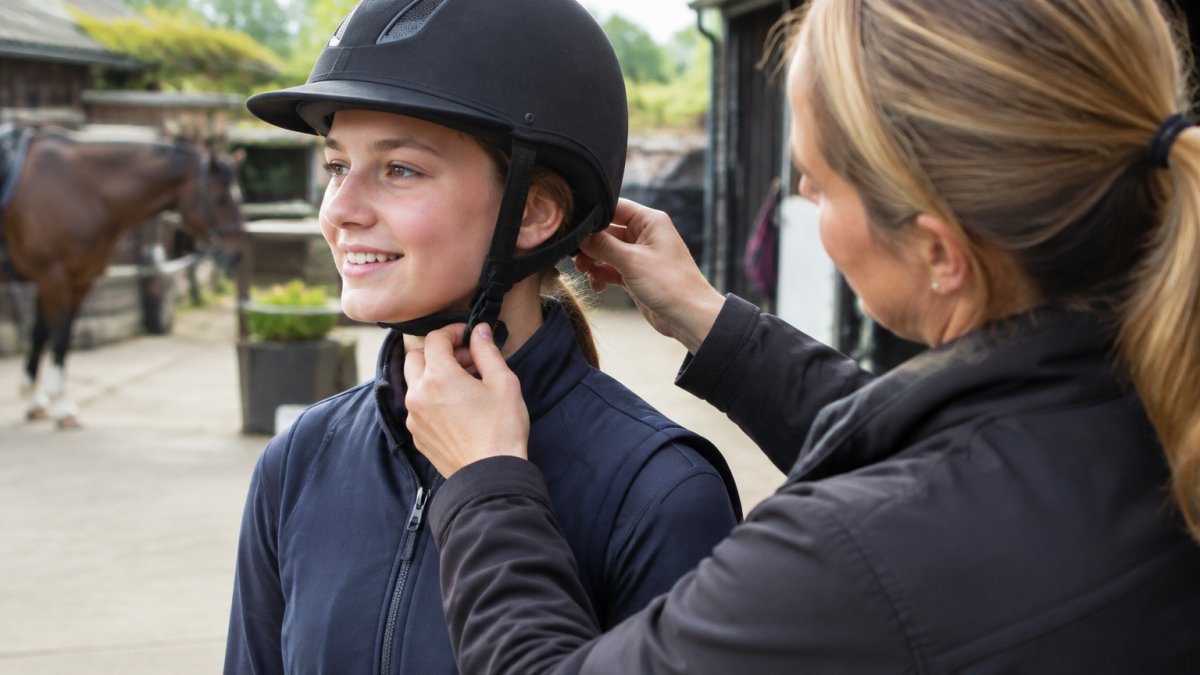
Dial-fit hats make this process easier, since the rear dial can be turned to tighten the hat in small increments. You can compare the Whitaker Nrg Sport Horse Riding Hat, another dial-fit hat with a certified standard.

A common mistake is buying a hat a size too large in the hope of growing into it. A loose hat moves on impact and offers far less protection, so buy the size that fits now.
What to Wear for Horse Riding: Clothing for Comfort and Movement
Clothing for beginners should prioritise movement and comfort over fashion. Jodhpurs or riding breeches with a close fit at the leg reduce rubbing and stop fabric bunching in the saddle. Our Harry Hall Chester Jodhpurs are made from 95% cotton and 5% elastane, giving them a lightweight stretch that suits lessons well.
Layering is worth planning for, because a stable can feel cold in winter and very warm in summer. A fleece or light jacket and a breathable base layer will cover most conditions. Avoid loose, flapping clothing and anything with long, dangling cords or strings that could catch on tack.
Best Boots for Horse Riding Beginners: Footwear That Protects and Grips
Riding boots should have a smooth sole and a small heel so the foot does not slip through the stirrup. The Shires Moretta Materia Paddock Boots are a good example, with full-grain leather, a stabilising footbed and a shock-absorbing rubber outsole. For a wet-weather option, you can look at the Brogini Dorchester Waterproof Long Country Riding Boots.

[PAGE_LINK: Shires Moretta Materia Paddock Boots | page:6]
[PAGE_LINK: Brogini Dorchester Waterproof Long Country Riding Boots | page:7]
Beginner Horse Riding Kit List: Everything to Pack for Your First Lessons
A beginner's kit list splits into two parts: what you wear on the day and what you put in a bag. Riding schools vary in what they provide, so confirm before your first lesson whether you must bring your own kit.
What to wear for your first lesson:
- A certified riding hat, correctly fitted and fastened
- A body protector, particularly for jumping or younger riders
- Jodhpurs or breeches that allow a full range of movement
- Boots with a small heel and a smooth sole
- A breathable base layer and a warm mid-layer
- A waterproof jacket that packs down small
- Riding gloves for grip and to protect your hands from the reins
What to pack in your bag:
- A spare pair of socks, because wet feet ruin a lesson
- A water bottle and a small snack
- A hair tie or two if you have long hair, so it sits neatly under the hat
- A lightweight waterproof trouser layer for wet yards
- A small towel for muddy hands and boots
- Any medication you may need, and a note of your emergency contact
- A padlock for a locker if your school provides one
What a riding school may supply:
Rhinegold Dial-To-Fit Horse Riding Hat, Helmet, PAS 015, Kitemark →
Ask your riding school about the standard the hats they provide meet, and whether you need to bring your own. Owning a hat that fits you well is a sensible early purchase.
What to leave at home:
Loose scarves, long dangling cords, jewellery that could catch on tack, and anything with a trailing strap. These are a snagging risk around horses and in the saddle. Trainers and wellington boots are generally unsuitable for riding because they lack a small heel and a smooth sole.
Building a Prioritised Budget: What to Buy First and What Can Wait
A beginner's budget is best built in stages rather than bought in one go. The table below sets out a sensible order of purchase with realistic price bands, so you can see what a first kit costs and what can wait until your riding develops.
| Stage | Item | Typical price band | Why this order |
|---|---|---|---|
| 1 | Certified riding hat | £40-£120 | Protects the head; most schools require one |
| 2 | Boots with a small heel | £35-£110 | Required by many schools; protects the foot and ankle |
| 3 | Jodhpurs or breeches | £25-£70 | Comfort and movement; one pair is enough to start |
| 4 | Riding gloves | £10-£30 | Grip and hand protection; cheap to add early |
| 5 | Body protector | £60-£180 | Essential for jumping and younger riders; can follow once you know you will continue |
| 6 | Waterproof jacket and layers | £30-£120 | Practical for wet yards and cold stables |
| 7 | Country or long boots | £70-£200 | A wet-weather upgrade once you ride regularly |
What to buy first:
Spend first on the hat, because it protects the part of you that matters most and most schools will not let you ride without one. Next comes footwear with a heel, then a simple pair of jodhpurs. These three items cover the minimum most schools ask for and let you start lessons without overspending.
What can wait:
A body protector is worth buying early if you plan to jump or if you are a younger rider, but a beginner who is only walking and trotting can often hire one for the first few lessons. Waterproof country boots, a second pair of jodhpurs and a show jacket are all upgrades that can follow once you know how often you will ride.
How to keep the first spend sensible:
Buy protective items new, because a used hat or body protector may have unseen damage that reduces its protection. Clothing and boots can be bought second-hand if they are in good condition and fit well, but check the stitching, the sole and the heel before you part with any money. Set a first-kit budget of around £150-£250 for hat, boots and jodhpurs, then add the body protector and wet-weather layers as your riding develops.
Watch out: a cheap, poorly fitting hat is a false economy, because a loose hat moves on impact and offers far less protection than one that fits properly.
Fit, Sizing and Trying Gear On Before You Buy
Where possible, try gear on before you buy. Hats should be checked with the chinstrap fastened, boots should be worn with the socks you will ride in, and jodhpurs should be tested by sitting and bending. Use our size charts, which are shown in the product images, and measure head circumference and foot length before ordering.
We offer free UK postage on every order with no minimum spend.
Booking Your First Lesson and Starting Your Kit Today
Book your first lesson with a reputable riding school, ask what kit they require, and buy the protective items before you go. Once you have your hat and boots, you can focus on enjoying your riding rather than worrying about what you are wearing.
Shop the Full Range at Dufinkle, where you will find products from over 15 trusted brands, with free UK postage on every order.
Frequently Asked Questions
What should a beginner wear for their first horse-riding lesson?
For a first lesson, wear a correctly fitted riding hat meeting a recognised safety standard, a fitted long-sleeved top, and jodhpurs or stretchy trousers without loose cuffs. Choose footwear with a clear heel and a smooth sole. Avoid trainers, flip-flops and open-toed shoes. Many riding schools supply hats for beginners, so ask before buying. Comfortable clothing that allows you to move freely will help you feel secure in the saddle from the start.
What equipment does a beginner horse rider need?
A beginner needs a riding hat, suitable boots, and comfortable clothing that allows freedom of movement. A body protector is recommended for riders who are jumping or riding out, and is often required for children at riding schools. Gloves help with grip on the reins. Riding schools vary in what they provide, so check what is included before you buy. Buy the protective items first, as these matter most for safety.
Do beginner riders need a riding hat?
Yes. A riding hat is the single most important item for any rider, beginner or experienced. It should carry the British Kitemark to PAS 015, which is a recognised safety standard in the UK. A hat should be replaced after any significant fall or impact, even if no damage is visible, as the protective foam can be compromised.
What type of boots should a beginner horse rider wear?
Beginners should wear short boots with a clear heel to help stop the foot slipping through the stirrup. A smooth sole helps the foot release if you come off. Paddock boots with a zip or lace front work well for most riders. Shires Moretta Materia Paddock Jodhpur Boots, priced at £36.00 for children's sizes, offer a good balance of comfort and stability for everyday riding. Browse the range at Dufinkle to find the right size.
Do you need jodhpurs for your first riding lesson?
Jodhpurs are not strictly essential, but they are the most practical choice. They are stretchy, fitted at the leg, and have no loose fabric that can catch on the saddle. Riding leggings or other snug trousers without external seams also work. Avoid jeans, which can rub and restrict movement. Harry Hall Chester Girls Jodhpurs, at £18.99, are a lightweight option for children starting out, made from 95% cotton and 5% elastane.
How should a riding hat fit?
A riding hat should sit level on the head, low on the forehead, just above the eyebrows. It should not move when you shake your head, and the chinstrap should be snug with room for one finger underneath. The Rhinegold Dial-To-Fit Horse Riding Hat, priced at £44.99, has a rear dial system that allows a precise, secure fit.
What should you bring to your first riding lesson?
Bring your riding hat, boots, and clothing that fits the guidance above. A water bottle and a small snack can help on warm days. Gloves are optional but useful for grip. Check with your riding school beforehand, as some supply hats and boots for beginners, which may save you money on your first lessons.
