

Last Updated: November 8, 2026
Quick Summary
To save on equestrian gear, compare prices across at least three stockists and add postage to the total before deciding, as a low price with high delivery often costs more. Time purchases around seasonal and end-of-line sales, buy second-hand for non-safety items, and track cost per use to judge real value.
- Compare at least three stockists for any item over £30 and check the returns window.
- Buy riding hats new and professionally fitted, as internal damage cannot be seen.
- Beginners only need a hat, boots, jodhpurs and gloves to start riding.
- Work out cost per use by dividing the price by the number of times you will use it.
- Never patch or repair a riding hat or body protector; damaged safety gear must be replaced.
Table of Contents
- 1. Shop Around and Compare Prices Before You Buy
- 2. Time Your Purchases Around Seasonal and End-of-Line Sales
- 3. Buy Second-Hand Riding Gear Without Compromising Safety
- 4. Start With Essential Horse Riding Equipment for Beginners Only
- 5. Learn How to Care for Horse Riding Equipment So It Lasts
- 6. Build a Gear Budget and Track Cost Per Use
- 7. Repair, Share and Sell to Stretch Your Budget
- Frequently Asked Questions
1. Shop Around and Compare Prices Before You Buy
Learning how to save on equestrian gear starts with one habit: never accept the first price you see. Riding equipment varies wildly between stockists, and a few minutes of comparing can cut your spending fast.
Check several saddlery sites before you commit. Note the price, postage and returns policy for the same item. Postage is where cheap deals quietly fall apart. A low price plus high delivery often costs more than a slightly higher price with free postage.
We keep postage simple at Dufinkle: free UK postage on every order, with no minimum spend. That makes price comparison honest, because the number you see is the number you pay.
Before you compare, it helps to know whether budget brands hold up. Our guide on whether cheap equestrian brands are worth it explains what to look for.
- Compare at least three stockists for any item over £30
- Add postage to the total before you decide
- Check the returns window
- Look at the full range rather than one product
Citizens Advice guidance on shopping rights and returns
2. Time Your Purchases Around Seasonal and End-of-Line Sales
Timing is the cheapest discount you will ever get. Saddlery stock moves with the seasons, and prices drop when ranges change.
End-of-line items are last season's colours and sizes. You simply pay less because the colour is no longer current.
Watch for clearance pages after major show seasons. Sizes sell out fast, so know your measurements before the sale starts. Write them down: hat size, boot size, waist in inches. Then you can buy quickly when a bargain appears.
A common mistake is buying something just because it is reduced. A cheap item in the wrong size is still wasted money. Check the fit rules first, then buy.
3. Buy Second-Hand Riding Gear Without Compromising Safety
Second-hand riding gear can save you a lot of money, but safety must come first. Some items are fine used. Others should always be bought new.
Second-hand riding gear is pre-owned tack, clothing or equipment bought from another rider, a second-hand tack sale or an online marketplace. The savings are real, but the condition matters more than the price.
Buy used with confidence for:
- Jodhpurs and breeches with no worn knees
- Stable rugs and turnout rugs that are still waterproof
- Grooming kits and buckets
- Saddle pads and numnahs
- Tack boxes and storage
Never buy these second-hand:
- Riding hats, unless you know the full history and it has had no impact
- Body protectors that have been worn in a fall
- Any leather strap showing cracks or stretched holes
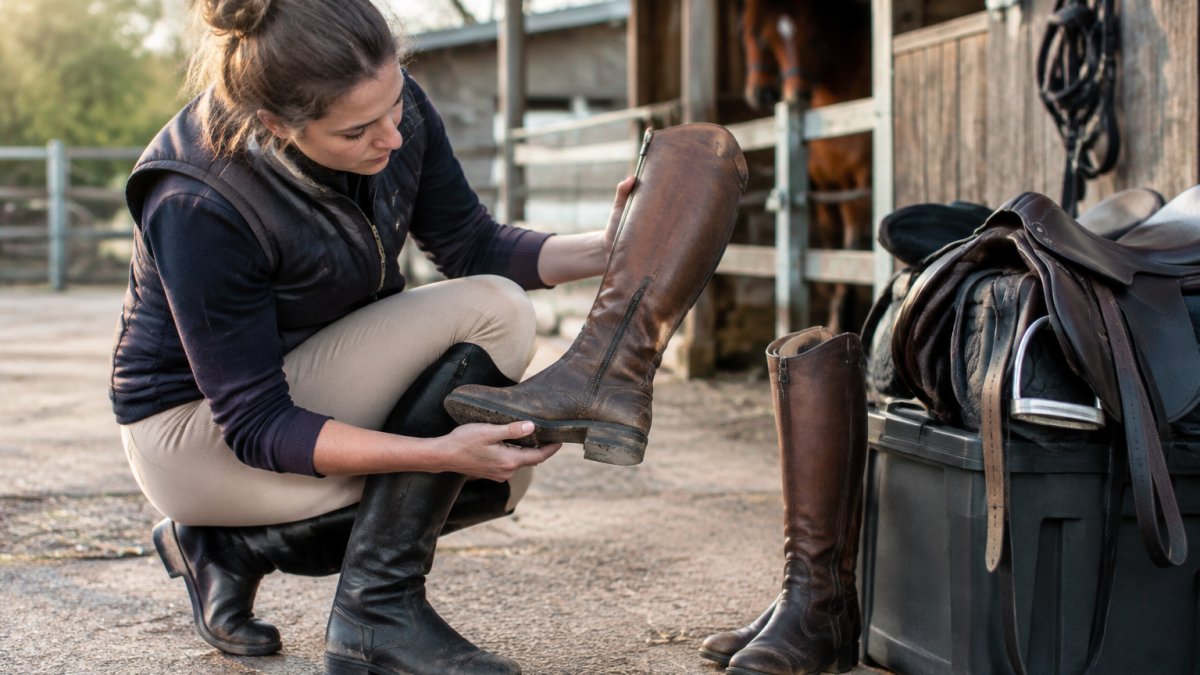
Check every strap, buckle and stitch before you pay. Ask how old the item is and whether it has been in a fall. A good seller will answer without hesitation. Watch out: a hat sold as "barely used" may have been dropped, and you cannot see internal damage. Buy riding hats new.
4. Start With Essential Horse Riding Equipment for Beginners Only
Beginners do not need everything in the catalogue. They need a small, safe kit and nothing more.
Essential horse riding equipment for beginners covers the basics: a well-fitted hat, boots with a smooth sole and a defined heel, comfortable jodhpurs, and gloves. That is the core. Everything else can wait until you know your discipline.
A practical starter checklist:
- Riding hat, professionally fitted
- Jodhpur or paddock boots
- Jodhpurs or breeches
- Riding gloves
- A waterproof jacket
- Half chaps, once you ride regularly
Buy the hat new and fitted. Buy boots and jodhpurs at a sensible price. Our budget-friendly riding accessories guide shows what to buy first, and our list of what a beginner rider needs to start covers the full kit.
For footwear, the Shires Wessex Leather Jodhpur Short Boot is £33.99, with a quality real leather upper and rubber moulded sole. It suits beginners who want a proper boot without a big spend.
5. Learn How to Care for Horse Riding Equipment So It Lasts
Good care is the cheapest way to save.
How to care for horse riding equipment comes down to cleaning, drying and storing. Wipe leather after every ride. Clean off mud before it dries. Let wet rugs dry slowly, away from direct heat.
Simple habits that add years:
- Clean and condition leather monthly
- Store boots on a rack, not crumpled in a bag
- Wash saddle pads regularly to stop sweat damage
- Check stitching and buckles every few weeks
- Repair small tears before they spread
Our guide to buying quality horse tack explains what makes good leather worth looking after. For daily care, our essential grooming kit list covers the basics.
6. Build a Gear Budget and Track Cost Per Use
A gear budget stops impulse buys. Cost per use tells you what is really good value.
Work out cost per use by dividing the price by the number of times you will use it. A £60 jacket worn twice a week for two years costs pennies per ride. A £25 item worn once was expensive.
| Item | Price | Uses per year | Cost per use (year one) |
|---|---|---|---|
| Jodhpurs | £26.99 | 100 | £0.27 |
| Paddock boots | £44.99 | 100 | £0.45 |
| Riding gloves | £15 | 80 | £0.19 |
Price
Set a yearly budget and split it into needs and wants. Replace safety items first. Then spend what is left on comfort and extras.
The FireFoot Farsley Ladies Jodhpurs are £26.99 in a cotton and spandex mix. The Harry Hall Chester Ladies Breeches are £29.99 and come in several colours. Both keep cost per use low for regular riders.
MoneyHelper budgeting guidance
7. Repair, Share and Sell to Stretch Your Budget
Repairs beat replacements. A new buckle, a restitched strap or a patched rug costs a fraction of buying new.
Sharing works well for equipment you use rarely. Transport to shows, horseboxes and rarely used items can be shared between trusted riders at the same yard. Agree who pays for what before you set off.
Selling unused gear funds your next purchase. Clean it, photograph it in good light and describe any faults honestly.
DIY repairs worth trying:
- Replace broken buckles and clips
- Restitch torn rug straps
- Re-waterproof turnout rugs
- Patch small holes before they tear further
Watch out: never patch or repair a riding hat or body protector. Damaged safety gear must be replaced, not mended.
Saving on equestrian gear comes down to comparing properly, buying at the right time and caring for what you own. At Dufinkle, we stock affordable kit from over 15 trusted brands, tested by riders with more than 40 years of showing experience. Every order ships with free postage and no minimum spend. Get started with Dufinkle and build a kit that lasts without overspending.
Frequently Asked Questions
Is it safe to buy second-hand riding gear?
It depends on the item. Second-hand riding hats should be avoided unless you know their full history, because a fall can damage the shell without visible cracks. Boots, jodhpurs and saddle pads are generally fine if the stitching, soles and fastenings are sound. Always check leather for cracking, elastic for stretch loss and zips for missing teeth before you pay. If a seller cannot confirm a hat has never been dropped or involved in a fall, walk away and buy new.
What essential horse riding equipment for beginners should I buy first?
Start with a properly fitted riding hat, a pair of jodhpur or paddock boots and comfortable breeches. Add gloves and a body protector once you begin jumping or hacking on the road. You do not need to buy every item at once. Many beginners borrow a whip and grooming kit from their riding school while they save for their own. Spend your first budget on safety items that fit correctly, then add clothing and stable kit as your riding develops.
How can I make my equestrian gear last longer?
Clean leather after every ride with a damp cloth, then condition it monthly to stop cracking. Store boots on trees and hang jodhpurs rather than folding them. Wash saddle pads according to the label and avoid fabric softener, which clogs breathable fibres. Dry wet gear away from direct heat, as radiators harden leather and shrink elastic. Check stitching and fastenings every few weeks so small repairs do not become replacements.
When is the best time to buy equestrian equipment?
End-of-season sales can be a good opportunity to look for lower prices. If you can wait a few weeks for a specific item, set a price alert or check back regularly. Out-of-season buying works well for breeches, base layers and turnout rugs you will need next year.
